
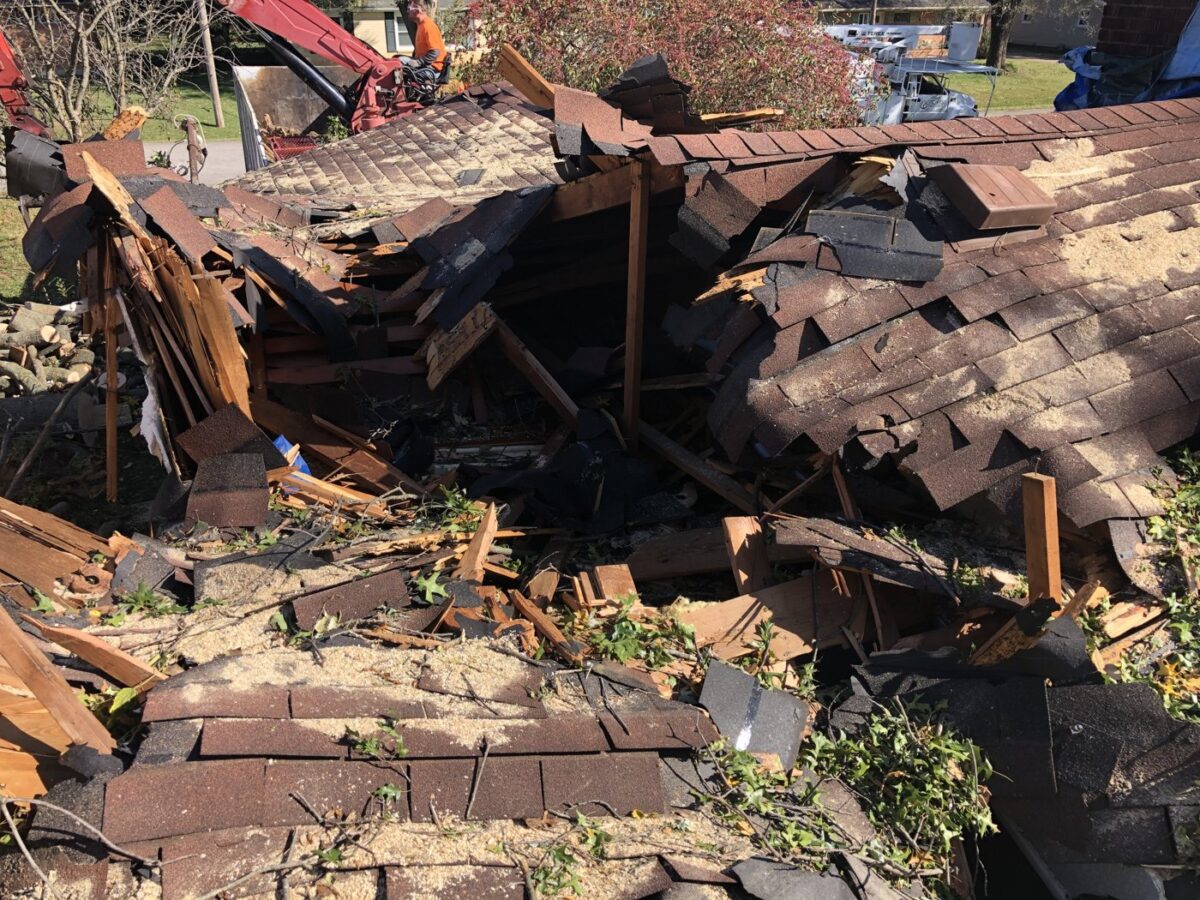
Homeowners insurance can be quite a bit more nuanced than most customers expect in how it pays out when a tree comes down. Some policies are pretty stingy about it, and others are a little more open. Here is what we see on the jobs we do.
What the policy usually pays
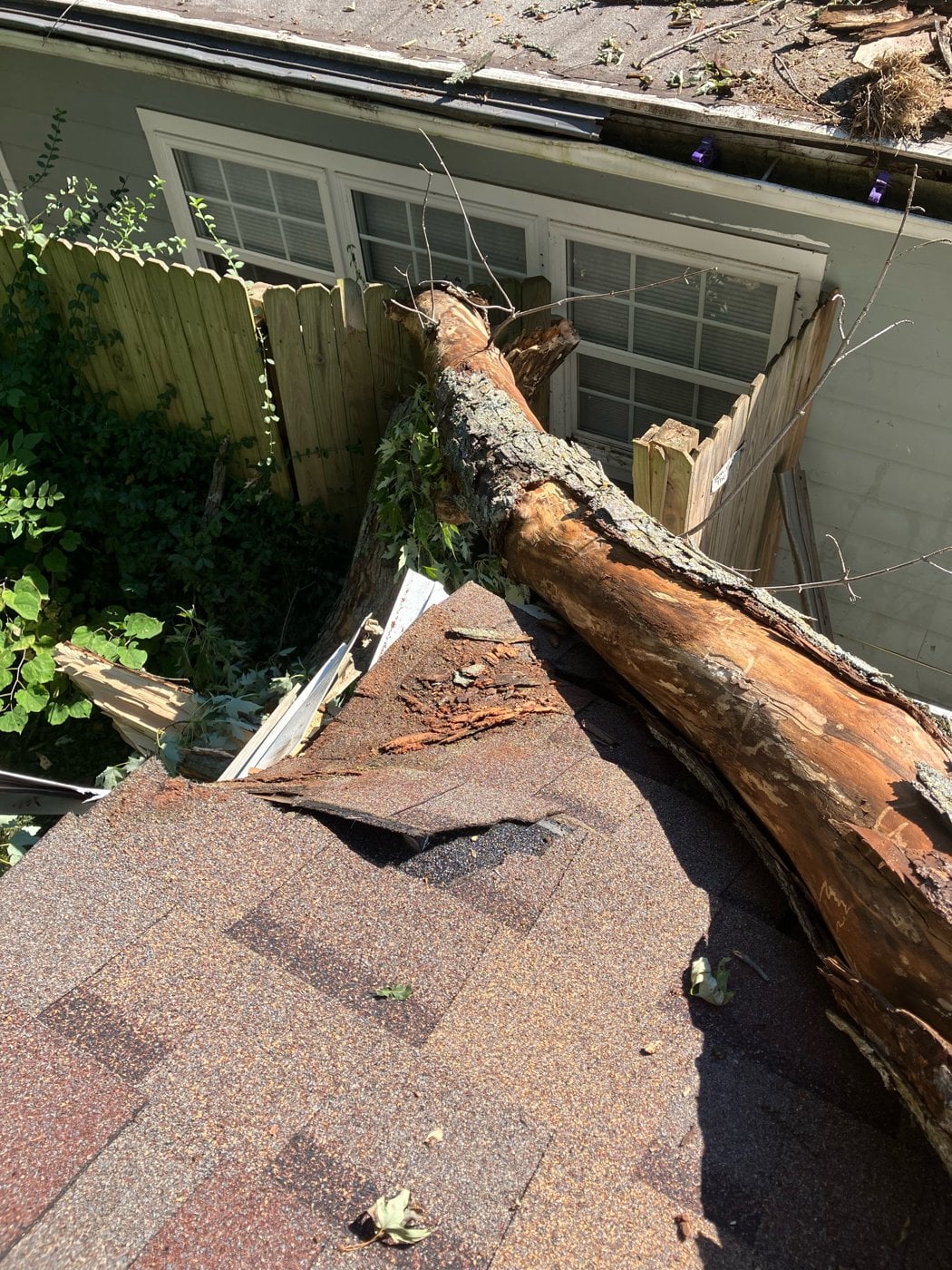
In our experience, policies typically cover removing the tree from the affected property, and then a much smaller amount for cleanup of the tree. We usually don’t see a limit on getting a tree off a house or fence. Hauling the material away is typically limited to a flat amount somewhere around $500 to $1,000, so check your policy. Every insurance company has its own rules, so we run into variations of this. Do not count on the payment until that company says so.
If a tree is sitting on something the policy covers, even a chain link fence, it should be covered to have the tree removed off of that, although sometimes just the very small amount that covers the fence.
Policies often pay for tarping the roof too. Keep that receipt and send it in, and leave the actual repair until an adjuster has looked.
What it usually does not pay
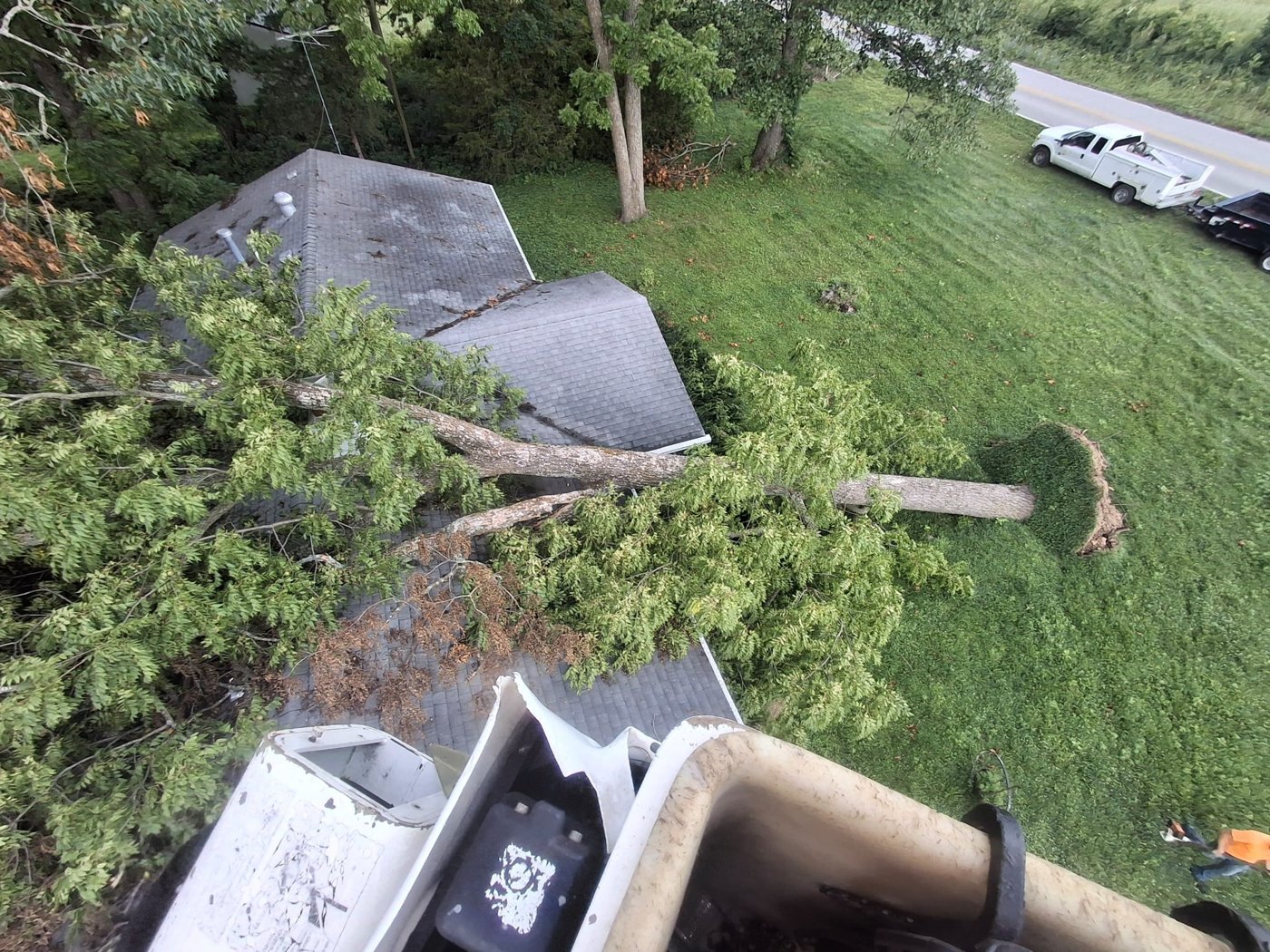
One thing that surprises many customers is that a policy most often does not pay for the complete removal of a tree that is sitting on the property. Off the fence, or off the house, is typically the part they pay for. Stumps are likely not included.
Another surprise is that trees which are a risk to the property are most often not covered. In nearly every case we have dealt with, the tree has to actually fall on the property before the insurance company will pay for it. We have not seen one case where an insurance company pays ahead of time for a risk to property.
Should you file a claim?
It depends on how big the tree is that is lying on the property. With a small tree and a big deductible, the customer might decide to pass on filing a claim and just pay us directly for the work. The easiest way to find out what you should do is to just call us and have us come out and give an estimate. The estimate is free, and we will prioritize your urgent situation. It really helps as well to have a good understanding of how your insurance works while making these decisions. With these things out of your way, it should be fairly straightforward whether to file a claim or to just eat the cost.
What to photograph
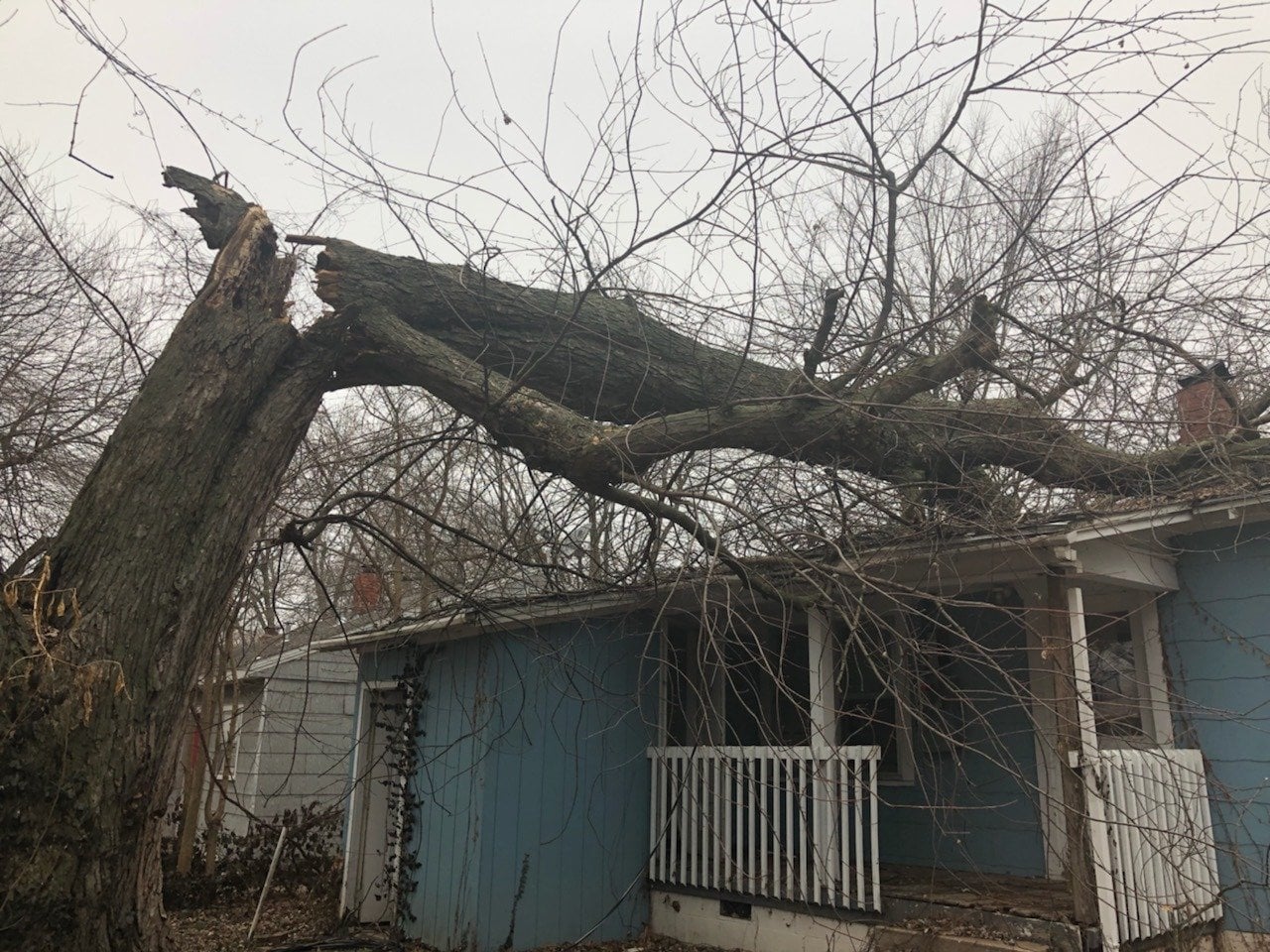
Customers should photograph several angles of the damage, as long as it is safe to do it. If the tree is sitting on the house, certainly avoid walking underneath the tree. It really isn’t necessary to climb up on your roof either to get pictures, as the adjuster will typically do that if they need it. If you want pictures, we are happy to accommodate you while we are doing the work. Regardless of what the adjuster asks for, taking lots of pictures is a good idea. It is especially recommended to take photos before and after when the adjuster does not come out in person.
Who gets the bill
Usually the customer is the one who pays us, and then deals with their insurance company. Some insurance companies work in such a way that our bills go directly to them. Others will pay the homeowners. This is something to decide with the insurance company. We have very little control over that.
Want someone to look at the tree?
Free and on-site.