
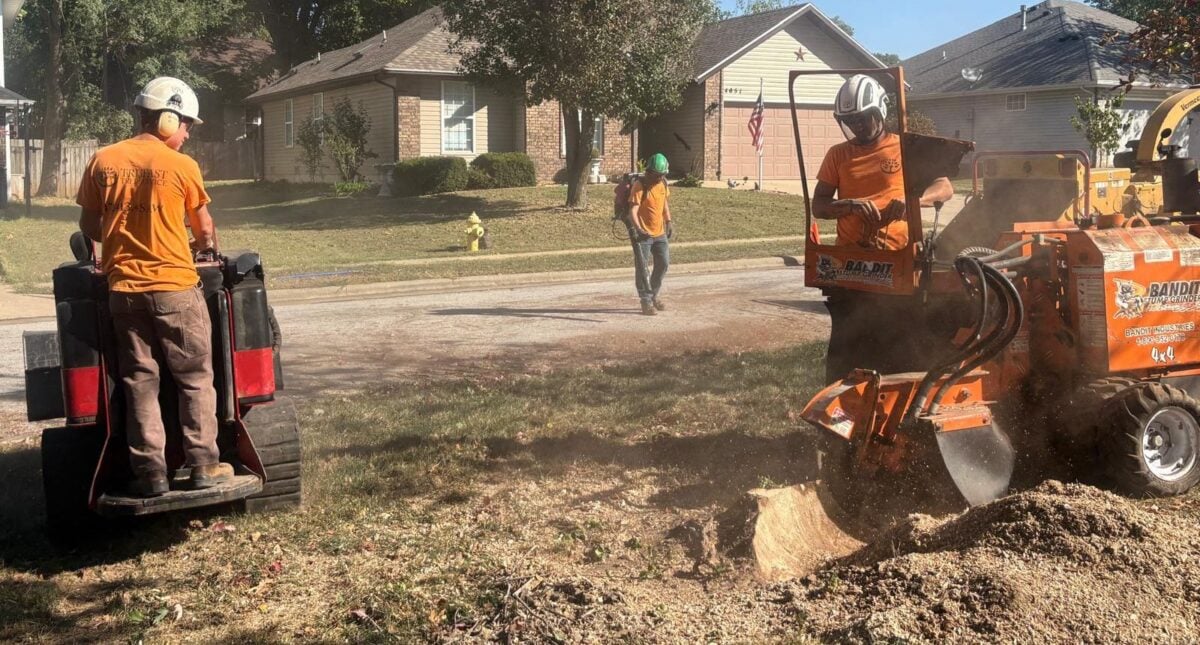
I used to leave the stump when I removed a tree from my yard – I thought I would just leave nature to take its course. But the problem with that was that stumps are surprisingly durable and I found they stick around for years, far beyond when the cool factor of having a stump left in my yard had worn off.
Stumps can be an eyesore that not only makes mowing a nuisance but also opens the door for insects, becomes a tripping hazard, and, in general, restricts what you can do with that part of the yard.
So how do you best dispose of it? That depends on a host of factors: the soil (in Southwest Missouri, that is code for rocks), your budget, where the stump is located, its size and roots, and what you plan to do with the space once it is out of the way.
For the homeowner, there are four options to consider. Grab an axe and go to hacking on it, rent or hire a digging machine to remove it entirely, use chemicals to speed the decay, or grind it out using a stump grinder.
Stump Grinding vs. Removal
If you go with grinding, you let a machine do the heavy lifting. The grinder’s rotating teeth are sharp enough to turn the wood into chips until the stump is well under the ground.
Most would say this is the preferred method; put it 6 to 12 inches below the surface, cover with dirt, and the yard looks fine again once it has the chance to let the grass reclaim the area.
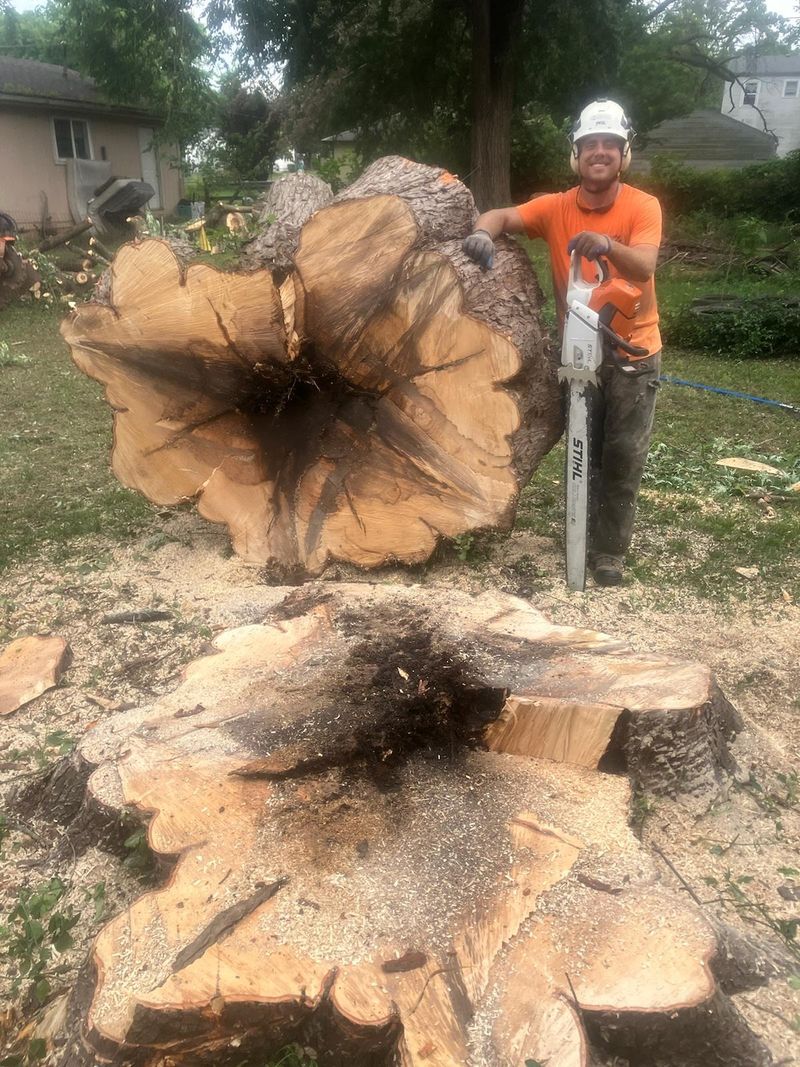
A complete removal is more of an undertaking: you have to exhume the root ball, not just what is visible above ground. In one way, it’s superior because you immediately backfill with dirt and your yard is back to ideal for planting grass. On the expense side though, it’s quite a bit more expensive, and even prohibitive depending on how big the stump is. It’s a bit like an iceberg – whatever you see above the ground (once it’s a stump) has many times the amount of wood and roots under the ground. So there is a lot of digging, pulling, and backfilling involved, which adds to the cost and labor, and a big hole to fill when you are done.
Grinding is the less expensive and less disruptive route, but you are left with some roots. They will eventually decay, but it can take up to 10 years, depending on the tree and how much moisture is in the soil, before they are fully gone. Just remember, the wood chips and existing wood material under the soil is a nitrogen suck, so you’ll need to remove all the chips, replace with rich soil, and keep it fertilized if you want grass to grow on that spot. And make sure to request the contractor get the stump well below grade.
How to Use a Stump Grinder
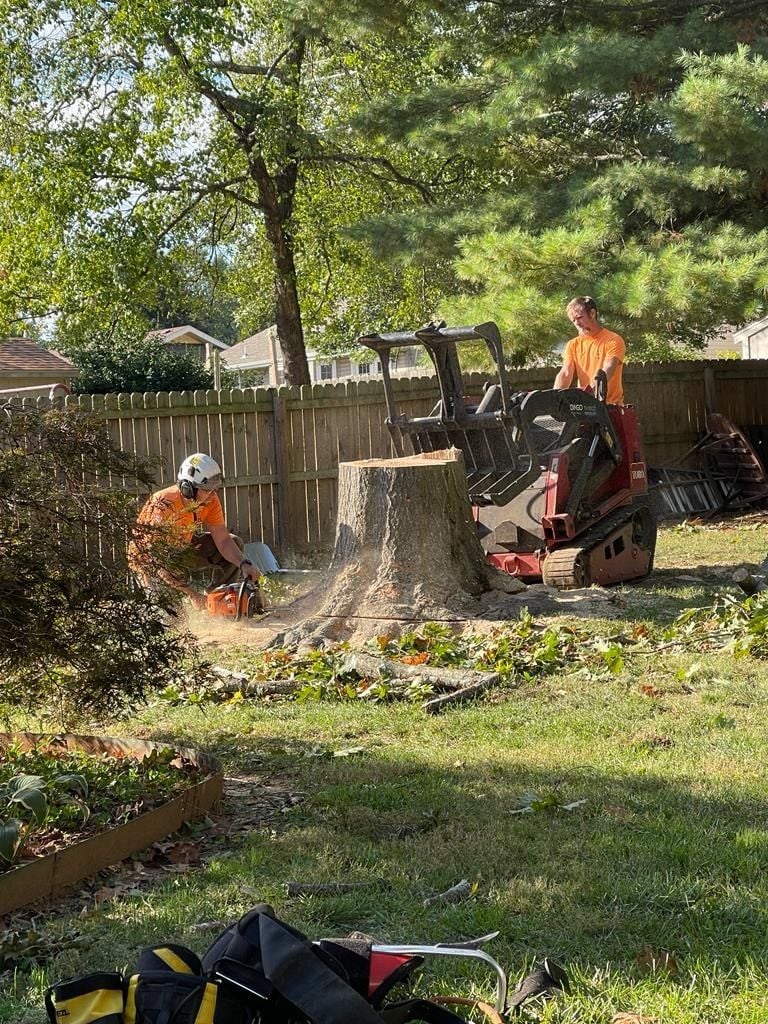
On balance, a grinder is hard to beat for efficiency on an average stump. Unless you are up against rocky ground, a particularly large specimen, or have trouble getting to it, you can have a residential job wrapped up in under two hours.
Clear the rocks and debris from the base first, then make passes over the stump with the grinder to shave it down. You are left with mulch to put in your beds or around the yard, so long as you don’t let too much fresh wood pile up in one spot and alter the soil as it breaks down.
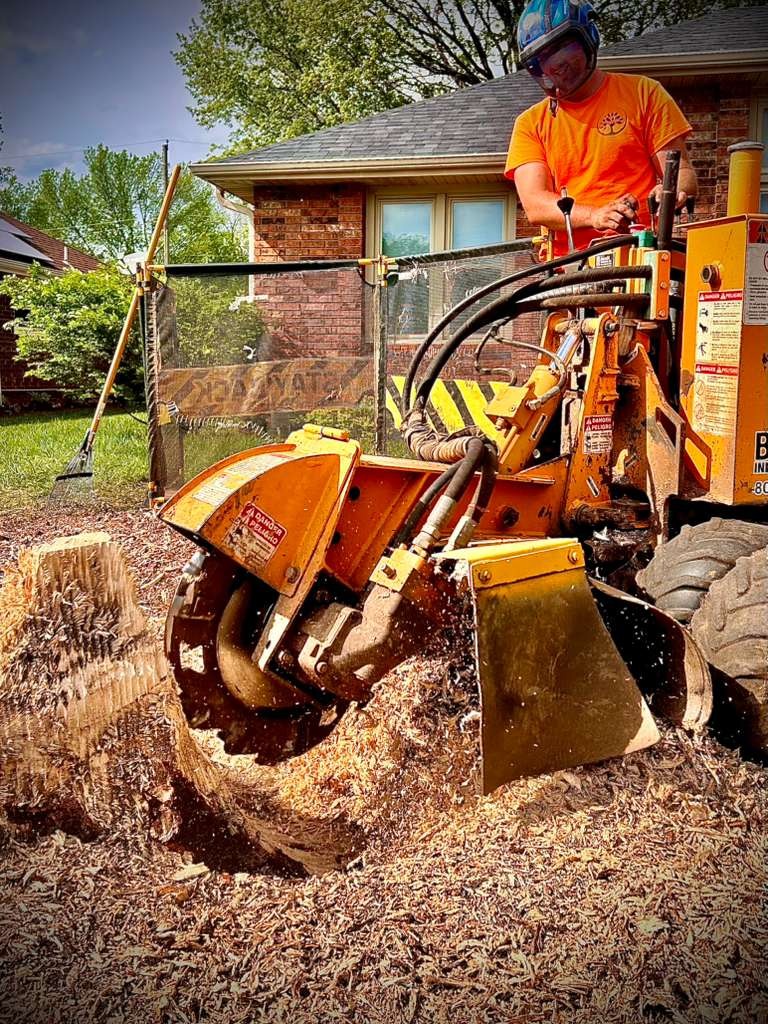
Safety is paramount. A grinder can weigh over 1,000 pounds and requires someone who knows what they are doing. Wear good boots, long pants, gloves, and ear protection along with your goggles. You don’t want to be on the receiving end of a flying rock or piece of wood.
If you want your tree stump removed by grinding, contact us here at Trufast Tree Service.
Complete Stump and Tree Removal
Should you choose to do a full removal, you will need to dig out the root ball. For something very small, 6 inches or so, you can manage with an axe and a pry bar. We wrote a step-by-step guide to doing it by hand. But for anything much bigger, you will want a winch or an excavator.
Don’t be fooled into thinking it will be easy. In Springfield, MO, the ground is compacted with rocks and heavy clay. That is hard going and will show in the price. A root no thicker than half an inch can resist you with 450 pounds of force. You are up against a force of that magnitude, which is precisely why you won’t often find a large stump to be an easy DIY project.
Then there are occasions when you have no choice but to make a full removal of it. You can’t very well put in a new driveway, patio, fence, or foundation on top of the thing, so it has to go. Likewise, if you want to plant a new tree and are done with the old root system for good, you’ll want the root ball out of there.
Chemical Method and Stump-Out Options
When the stump is in a place that can’t be reached by machinery, a chemical approach is worth a try. Many stump-out products use potassium nitrate as the active ingredient to speed decay; some also contain sodium hydroxide or magnesium sulfate.
The idea is to drill into the wood, pour the treatment in the holes, and water it. It may boost the rate of decomposition by 25 percent, but don’t expect it to be instant. Most stumps will be soft enough to break up in four to six weeks, though a big one could require more than one application.
As for cost, 8.5 fl oz of the stuff will run you from $7.50 to $27, depending on the brand and where you buy it.
In the end, the chemicals are cheaper, but not as quick. Just remember to read the label, wear gloves and goggles, and keep the product off your lawn and away from any pets or drainage.
Burning Stumps
You will likely hear some say you should just burn it, but there are caveats. For one, it is a safety issue, and open burning is prohibited inside of Springfield Missouri city limits.
And never think of using motor oil or gasoline to light it; the flare-ups are dangerous, and they will do a number on your soil. The simplest and safest solution is to hire a pro who offers stump grinding.
Small Stump Grinders vs. Chemical Treatment
A homeowner with the right gear and the strength for it can make short work of a stump with a small grinder, assuming the ground is level and you can get to it. This is probably the way to go if the stump is in the middle of the lawn and making mowing a pain or getting in the way of landscaping. However, if it is an old stump in a tight corner, the slow chemical approach might be preferable.
For anything substantial, or where utilities and structures are concerned, leave it to the professionals. Trufast Tree Service can come out and have a look at the yard and roots and let you know if grinding or total removal is called for.
After the fact
Once the stump is gone, you have the mess to contend with. Haul off what you can and put some of the wood chips to work in the garden.
If a full removal has left a hole, fill it with good topsoil and let it settle. If you plan to plant a new tree, pick a new spot. Give the area where the old stump was time to recover from all the decaying matter first.
With tree removal, if it’s done properly, your yard will be in great shape for whatever is next.
Want someone to look at the tree?
Free and on-site.