
If an uninsured tree crew damages your house or somebody gets hurt on your property, you can end up holding the bill.
When an uninsured company damages property and they don’t want to just pay for it up front and right away, in the situation where it’s a dishonest company, you as a homeowner would be required to sue them in order to get a judgment against them. Once you have a judgment, you have to collect on the judgment somehow.
If you don’t happen to know where they bank or don’t know where they own property, it might be quite impossible and not worth the trouble to try to figure it all out. If you do know that, there has to be money or value there that you can chase and reclaim, or you’ll just spend a bunch of money on attorney fees and not get there. This is a long, investment-intensive (emotions, focus, money) road to take with a dubious, even unlikely preferred outcome.
When somebody gets hurt on the job site and they sue, lawyers try to include as many parties as possible to have the most likelihood of finding value in some or all of the parties. The value of your assets and homeowner’s insurance is one of those targets.
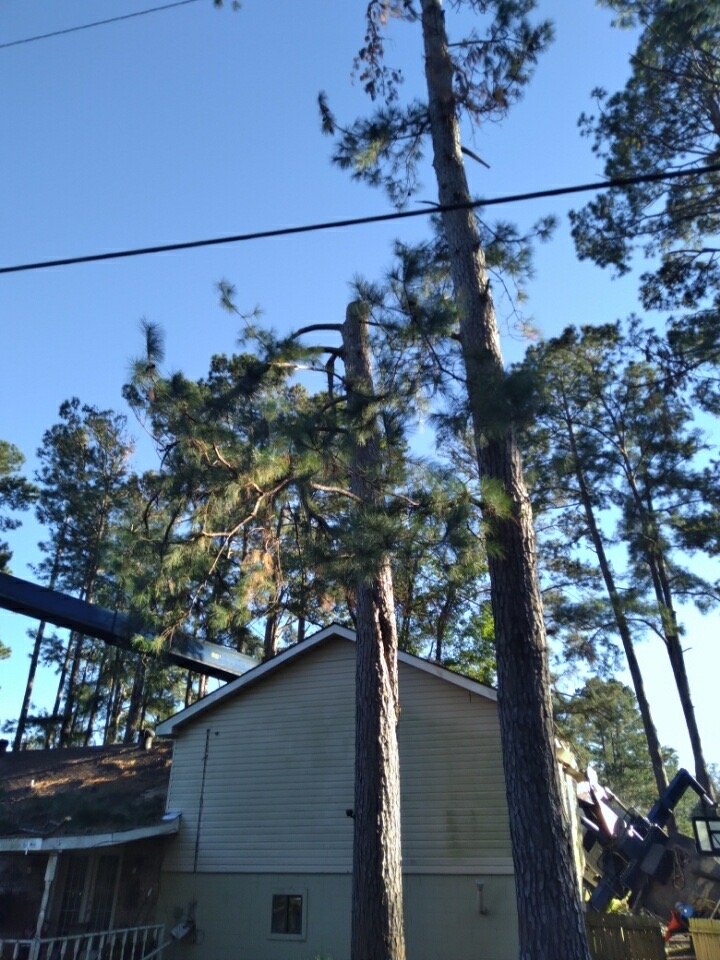
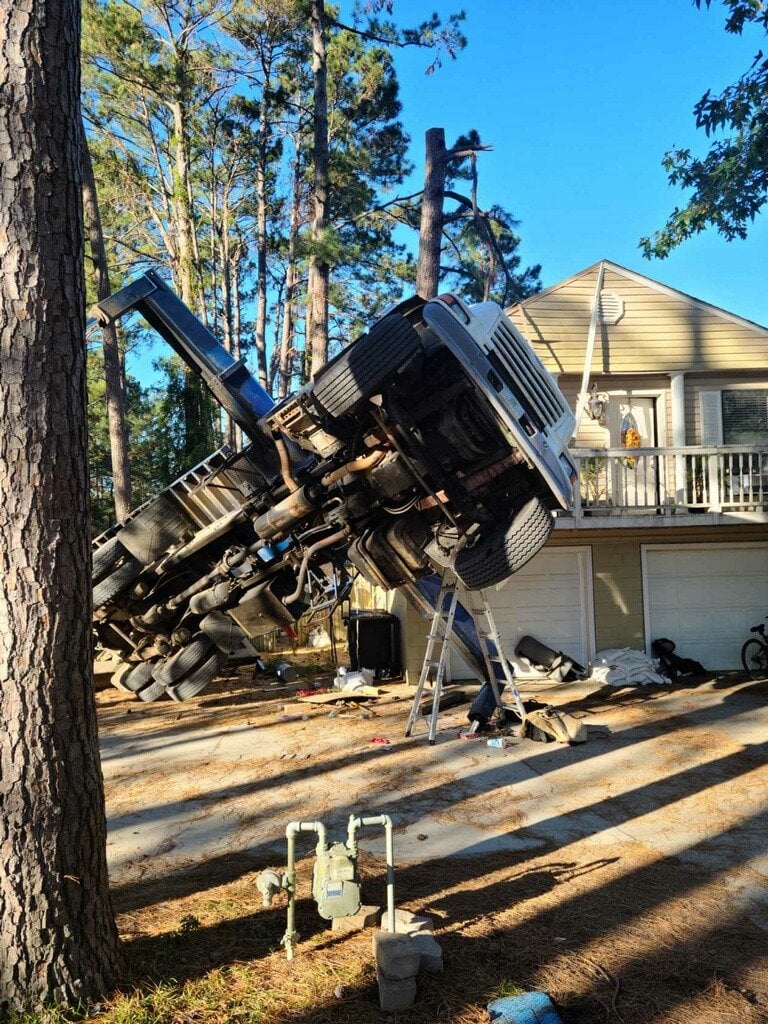
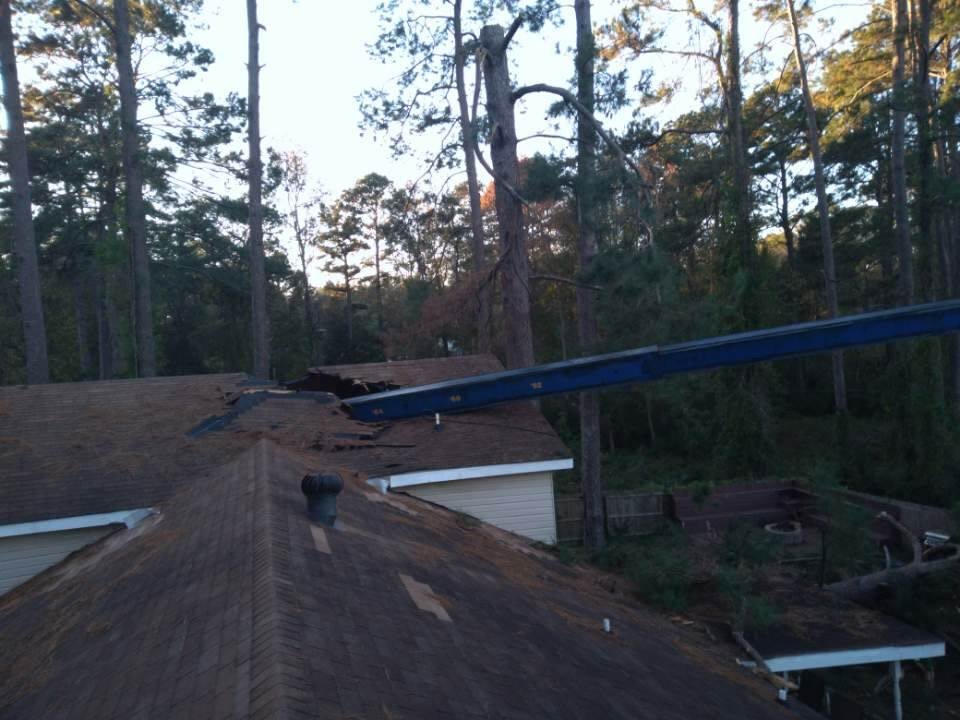
Here is one from our own files. In 2020 our crews went to southern Louisiana for hurricane cleanup. We hired a crane company for one job. Their crane outrigger failed. The boom went through the roof of a homeowner’s house and the truck ended up on its side against the wall. Nobody was hurt, but the house was a total loss and had to be completely rebuilt. The crane owner paid most of the cost. Our insurance paid a share of it too. Without insurance on both sides, that homeowner would have been the one chasing the money.
A tree company will pay between 5% and 10% of their gross income on all the insurance that they need to keep you well covered if they have a good, clean record of not too many insurance claims. If a tree company tries to get insurance but there are a lot of claims on their record, it could cost more than that. It could even be prohibitive for them to even get insurance, and maybe that is one of the reasons why they don’t have it.
One of the tricks we’ve seen in the past is that an uninsured company will grab a certificate of insurance (a COI) by purchasing insurance. Once they have the COI, they will cancel it, but they’ll keep the document and show potential customers the proof of insurance which is no longer in force. We heard about this from people we hired early on. They were showing us how to look like a solid company without being one. Saving money by cheating the system was what they were trying to teach us, a lesson we did not take to heart. But in cases like this, this type of scam-artist will typically show their hand by their sales process, by asking for money upfront, and other shady practices.
You can call the insurance company listed on the COI to double-check if you are afraid of this. I would say this is more likely on the very low end of the tree service market, the very shady types.
I think it’d be a lot more likely to run into an uninsured crew if they are door knocking or have a Facebook presence that you reached out to. Tree companies that have their signs stuck randomly at the corners of main roads or stapled to an electrical pole are far more likely to be shady and not have insurance. Naturally, we are asking our customers if we can put signs in their yards, so that is a totally different situation.
What we carry is general liability, auto, an umbrella, and workers comp. $1 million for the general liability. $4 million on one umbrella. West Bend Mutual is the liability, the auto, and the umbrella. ICW Group is the workers comp. The policy year we are in started June 5, 2026.
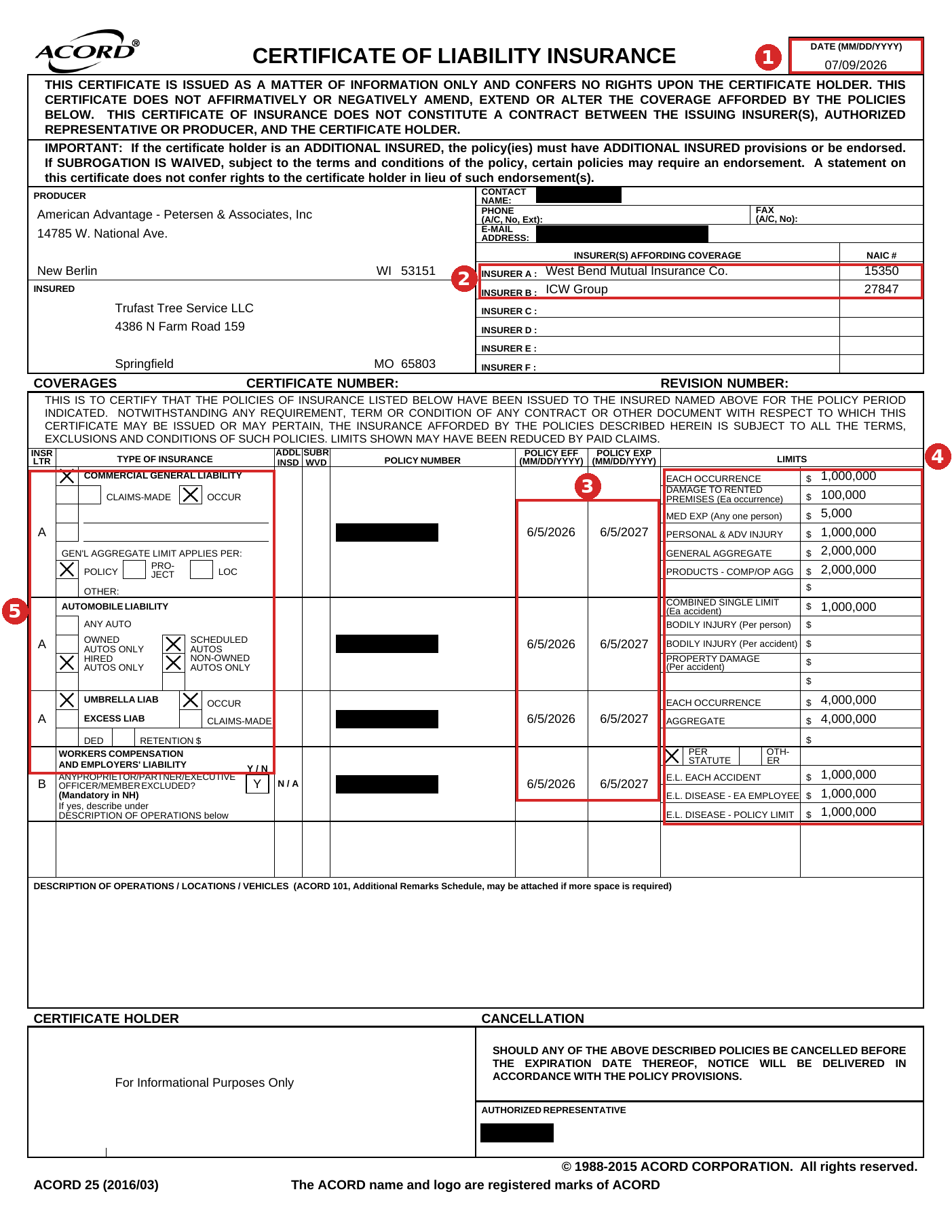
Make sure the dates on the insurance are not expired. See when the COI was actually issued, and if you have any questions, call the insurance company listed on there and make sure the insurance is paid and still in force.
If they need half the money down or want any money ahead of the work, that is a red flag. Run from that situation. The only time paying ahead is fine is when you already know the company well, and even then we say don’t do it unless there are extenuating circumstances that press you to do it (for your own convenience, not the company’s). And if they come across as shady or dishonest in any way, don’t hire them.
Want someone to look at the tree?
Free and on-site.