
Tree work in Ozark, MO
Trimming, removal, and stump grinding for Ozark homeowners — from an owner-operated crew working these hills since 2017, rated 4.9 across 500+ Google reviews. With years of combined experience providing tree services in Ozark, MO, our goal is to make tree service a smooth and simple process for you. We aim for honesty and competitive pricing. Tell us more about your plans. We are eager to accommodate you as best we can.
Request a free estimate
Free and on-site. We typically call back within 60 minutes during business hours.
Our apologies - that didn't go through. Call us instead and we'll get your estimate started:
(417) 413-4729Tell us about the tree. We’ll come look at it, free.
“Very fast response on a difficult large tree removal. They were great to work with.”
- About 20 minutes from our Springfield yard
- Free on-site assessment
- Full cleanup and haul-away included
- Certificates of insurance will be provided
Ozark is one of those quintessential Missouri towns that we cherish. With its rich tree diversity and fed by its position in the lush Finley River basin, it is a true gem of a city.
How We Trim
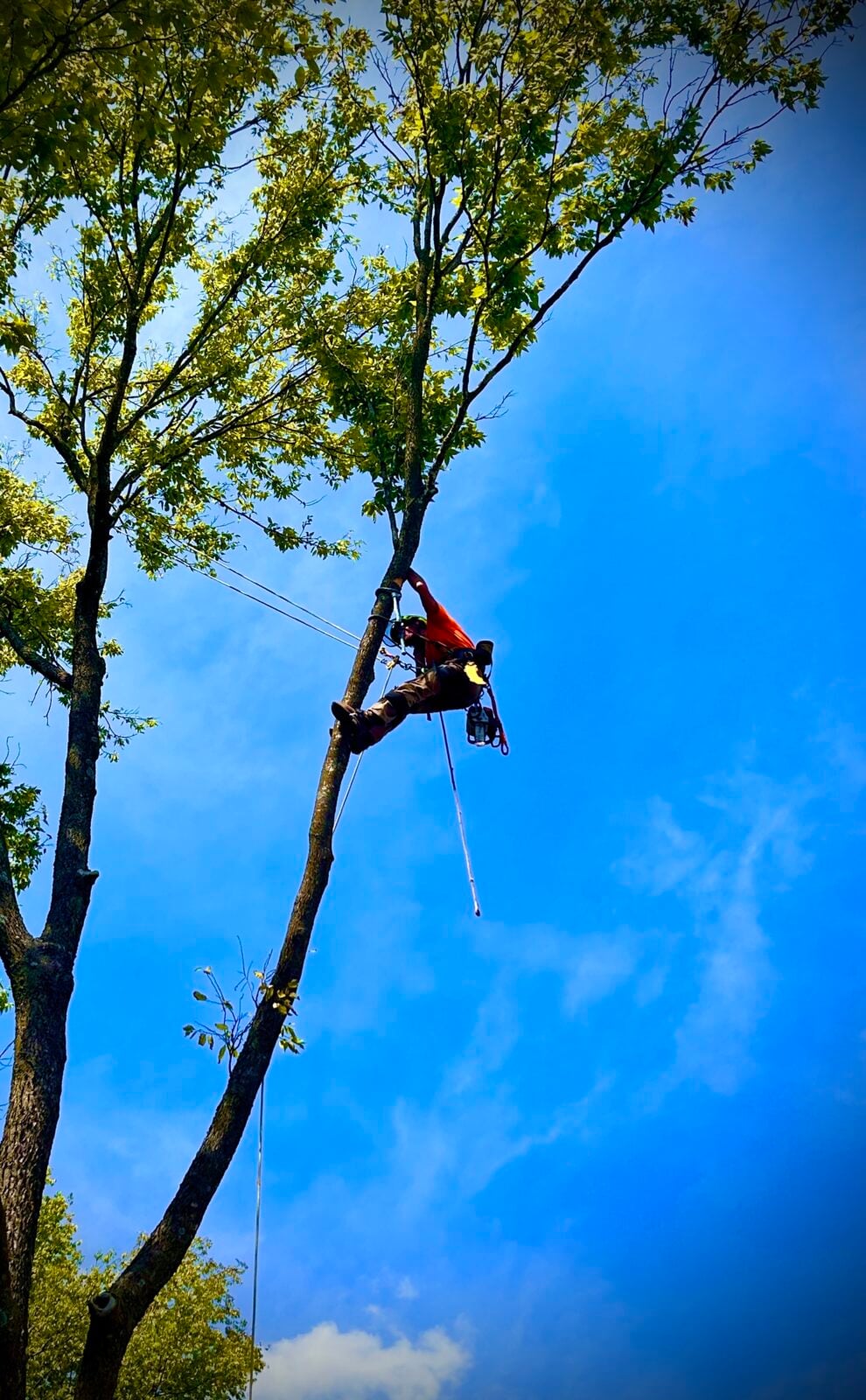
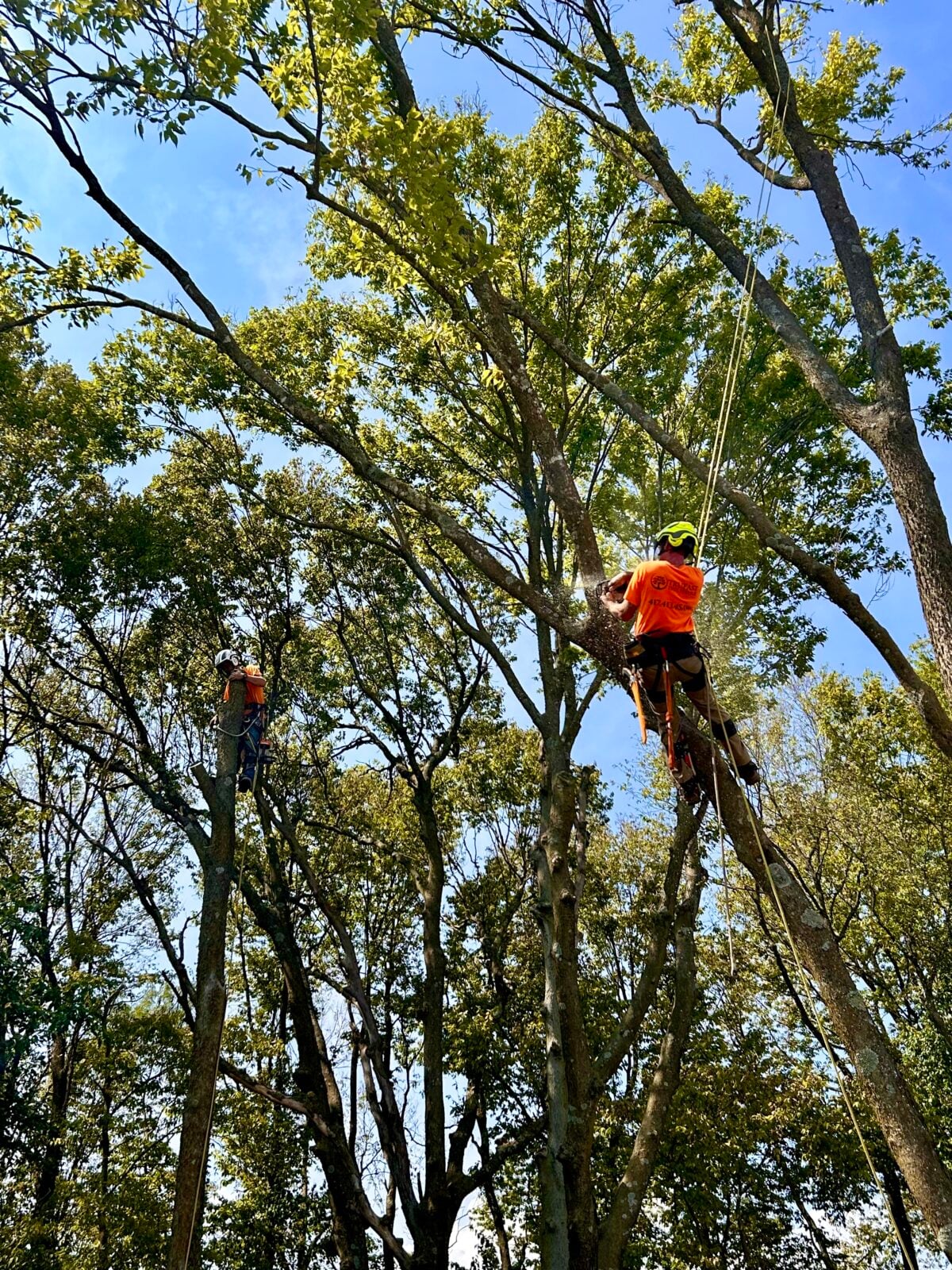
No spikes on trims
A branch that could hit something gets lowered instead of dropped
Quality-focused in every aspect
The cleanup
How We Remove
Tree removals have a different goal
Counting the costs for tree removal
- The size and location of the trees
- How many obstacles we are working around
- Tools and equipment needed to effectively finish the job
Equipment necessary for a job well done
Nothing left behind
When a Tree Grows Too Close to the House
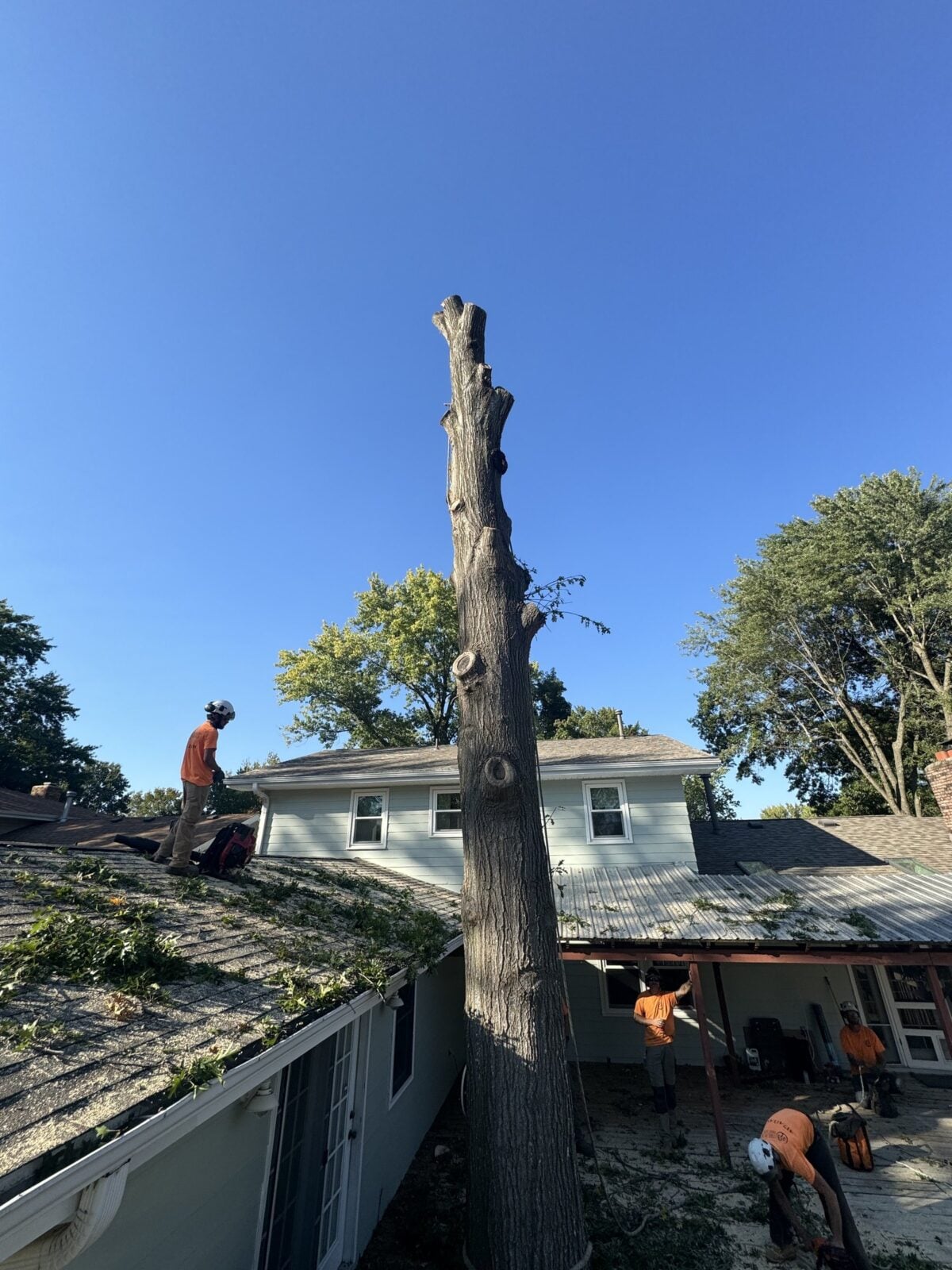
It is so often that we get called to look at trees that were allowed to continue growing as a small tree close to the house or sometimes even built into the back patio. Twenty years later that sapling is fifty feet tall, and it's leaning over the roofline or starting to lift the deck as it rubs against it and the trunk and roots widen. Trees close to a house aren't automatically a problem, but what species of tree, and how well tended and pruned the tree is matters significantly. Small tree species (like Japanese maple) are fine next to the house, so long as the foundation doesn't have cracks that the roots can find. But we have seen some trees that were intended to be ornamental, when not pruned, grow up into a large problem. Here are some of the main risks in having the wrong species of tree grow out of control next to the house.
- Branches on the roof: Limbs that touch or hang just over the roof scrape shingles every time the wind blows. They fill the gutters with leaves, and they give squirrels an easy path into the attic. We like to keep branches several feet clear of the roof.
- Roots near the foundation: Roots rarely crack a sound foundation by themselves. But let's be honest, what foundation doesn't have a crack or two here in Southwest Missouri? Roots will find their way into cracks that are already there. And, in clay soil, a big tree pulls a lot of water out of the ground, and that drying can make soil shrink and settle under one corner of a house.
- Weight toward the house: A tree that leans toward the house, or has most of its branches on that side, puts the house in its fall path. That matters most in an ice storm, when limbs carry several times their normal weight.
Most of the time the fix is a good trim, not a removal. If a tree has gotten close enough that you're wondering about it, our arborist can look at it with you and tell you which it needs.
“Awesome company! I had 2 trees needing cut down and one trim. They did an amazing job not just with the removal but clean up. They frequently checked in with me on the trimming to make sure I was happy... Beyond impressed!”
A general customer review — not from a job in Ozark.
Family-owned company for a family-oriented community
As a family-owned company, our standards and culture reflect the values we see in our Ozark customers. We try to make every job clear and understandable, respectful, and even enjoyable from start to finish. We want to give down-to-earth, honest service that can be trusted because it's faithful to our shared values.
Talk to us about the vision you have for your trees and yard, or about that old tree you're worried about, and let us answer your questions with an honest expert opinion for your situation. Luke Smith, our ISA Certified Arborist, is on staff, and if you want that level of consultation, just ask for it.
“Great group of hard workers. They do an excellent job and have done so for me on a few occasions now; tree and stump removals. Thank you for what y’all do.”
“Did great work at a fair price.”
“The workers did a great job! I could not be more pleased!”
“Fast to respond and good communication. Work completed as negotiated.”
“They have cut 3 trees down for me and did a great job! Really appreciate their work and cleanup.”
“Trufast Tree Service is absolutely awesome. I will not use any other service.”
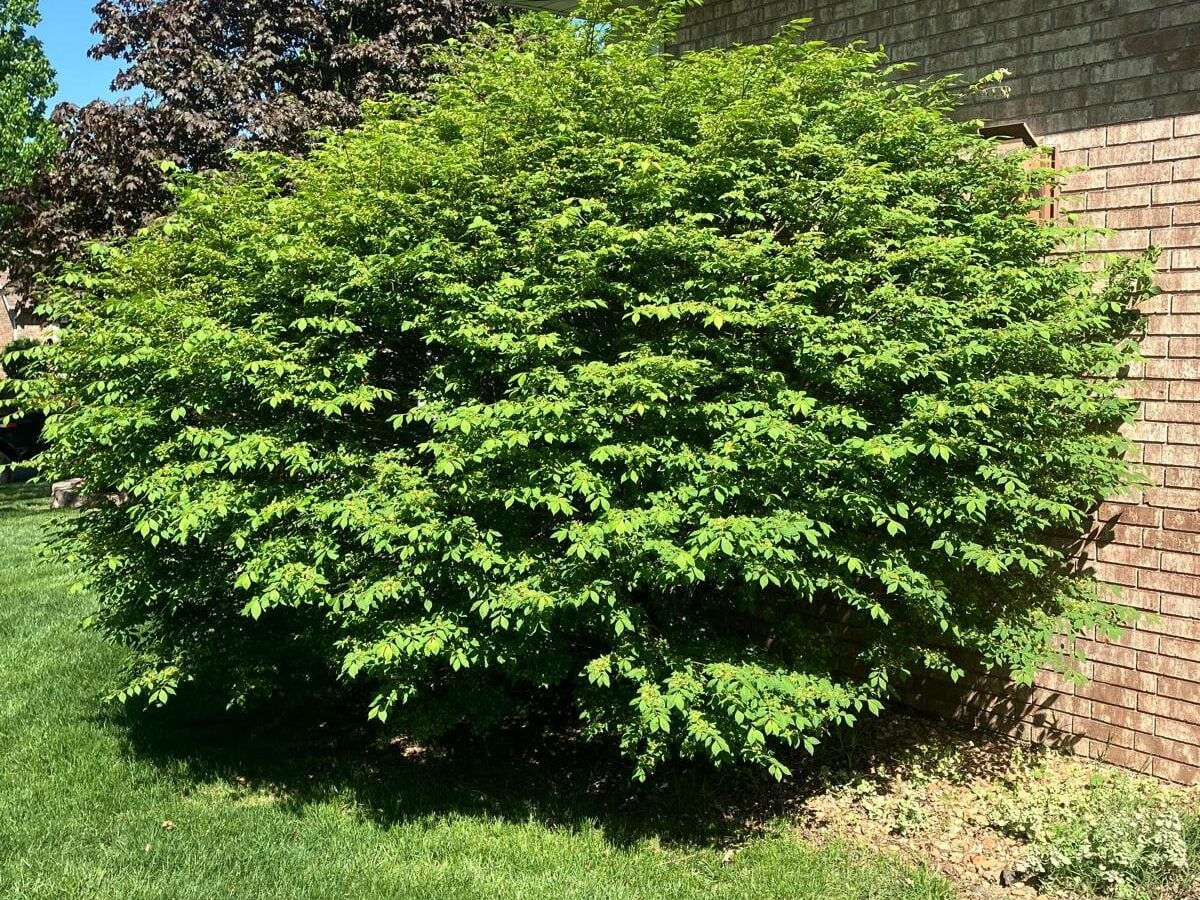
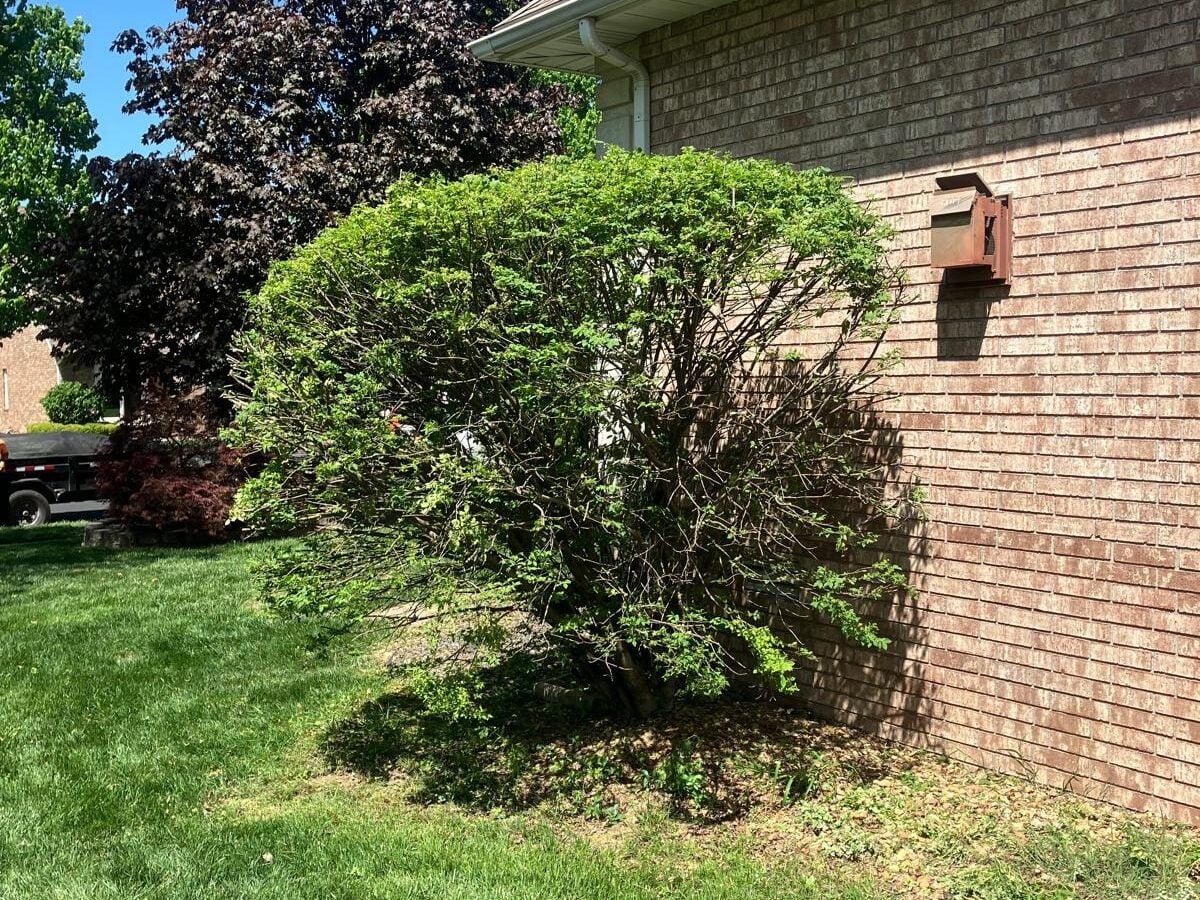
An overgrown shrub, trimmed back.
The bare lower half is years of shade from the top. Shaped right, it fills back in over the next couple of seasons.
What we do here.
Tree removal
Professional techniques bring the tree safely into its own footprint, with full cleanup and haul-away on every job.
See tree removalTree trimming
Pruned to keep the tree’s natural shape, climbed rope-only so the tree isn’t damaged by the work.
See tree trimmingStump grinding
Ground 3–6 inches below grade, filled with chips or topsoil on request.
See stump grindingEmergency response
Call anytime for storm-damaged or hazardous trees — we typically respond by the next morning.
See emergency responseArborist Services
An ISA Certified Arborist for tree health and risk questions.
See arborist servicesCounty Seat on Finley River
Ozark is the county seat of Christian County. The town is nestled in the Ozark Hills and has the Finley River running through it. It's a place, like so many of the not so small towns around Springfield, that has grown fast without losing its small-town feel and culture.
County-seat roots
Ozark started as a mill town. James Kimberling built the first mill on the Finley River in 1833, it became known as Hoover's Mill a few years later, and the town was spreading out beside it around 1843. When Christian County was formed in 1859, Ozark, with about 100 residents, was chosen as the county seat. The old mill on the Finley has burned and been rebuilt over the years, and it still stands today at Finley Farms, with a restaurant, a speakeasy, and a general store inside. The farm's gardens and beehives still supply some of what's on the menu. The restaurant has a historic feel to it, with outdoor seating that overlooks the Finley River. It's a great place for a romantic date.
Read more about Ozark · 7 more topics ↓ Show less ↑
Ozark Plateau terrain
Like most of Christian County, the landscape is not flat like northern Missouri, nor even like the hills around Springfield, but has the knobby, rolling hills that start into the Ozark Mountains. These hills are covered in mature trees and, because of the terrain, often are a little bit more difficult to access and remove, especially when the crew is dragging the wood and branches uphill.
Fast growth and a mix of old and new
Christian County has been one of the fastest-growing counties in Missouri for decades. Ozark is no exception with its mix of new subdivisions interspersed with decades-old creek-side lots. As a result, Ozark has a good mix of mature trees and the younger trees that come with newly built homes and apartments.
The case for trimming on a regular schedule
We recommend having your trees pruned once a year when they are young and trimmed at least once every two years when they are older. Not only do healthy, cleaned-up trees look better in your yard, but they also help increase the overall value of your home and property! On the other hand, failing to maintain the trees on your property puts you, your home, and the homes of those around you at risk of damage during wind and ice storms, which are common in the Ozarks.
On hedge and shrub trimming
Hedges and shrubs follow different rules than trees. The mistake we see most is a hedge sheared straight up and down, or wider at the top than the bottom. The top shades out the lower branches, and within a few years the bottom goes bare. Keep the base a little wider than the top so sunlight reaches all the way down. Spring bloomers like forsythia and lilac set next year's buds over the summer, so trim them right after they finish flowering. Cut them back in the fall and you've cut off next spring's flowers. And if a hedge has really gotten away from you, we can bring it back over a couple of seasons.
What rough mulching is
Chipping is the process of turning your trimmed tree branches into healthy, organic, and non-chemically treated mulch using smaller, pull-behind wood-masticating machines which are called chippers. The end result is wood chips, which are rougher than the finer mulch that you can buy in bags.
Clearing rotten or weak branches
Over time because of wind, storms, and branches dying, a tree develops a significant amount of dead wood. Dead branches are weaker and can create a safety threat. If you have dead branches in your trees, and especially if they are hanging (aka widow makers) we will take care of them safely.
What affects your estimate
A tree-trimming estimate is usually straightforward, but a few things can move the price: a tree close enough to come down on a house or a neighbor’s, branches tangled near power lines, a tree that hasn’t seen a trim in years, or simply how many trees are on the job. We’d rather walk you through these before we start than surprise you with them after.
Common questions
How much does tree trimming cost in Ozark?
Do you use pruning sealer on cuts?
Are you insured?
How quickly can you get to Ozark?
Do you have a certified arborist on staff?
Ready for a free estimate in Ozark?
We typically call back within 60 minutes during business hours. For storm emergencies, call anytime and we'll get back to you as soon as possible.