

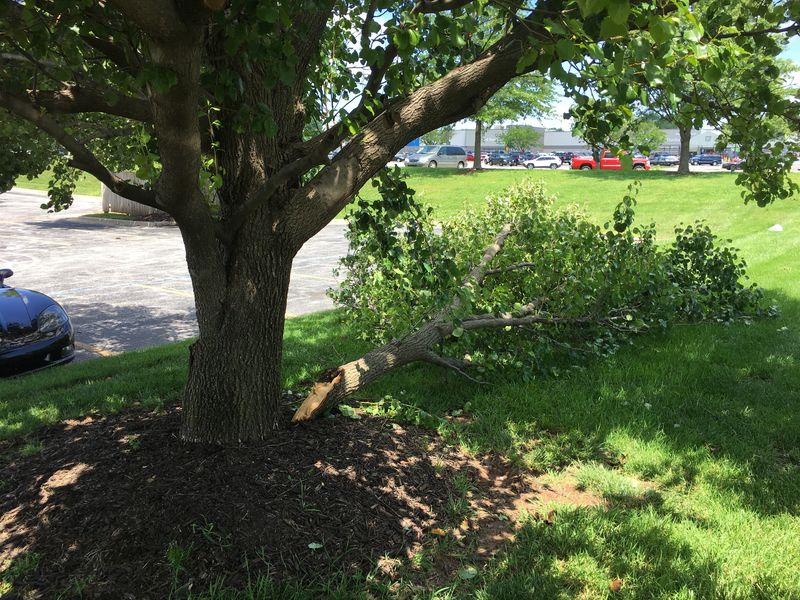
Bradford pears are beautiful and resilient trees that flower in the spring and look amazing. After 10 or 15 years, though, they’re in great danger of splitting out and falling. They don’t have the strength in the structure of the tree to handle the weight of the branches. It’s a heavy wood, in fact, some of our crews don’t really enjoy handling except with the mini skid.
Storm damage
Since 2019 we’ve done more than 200 Bradford pear tree removals.
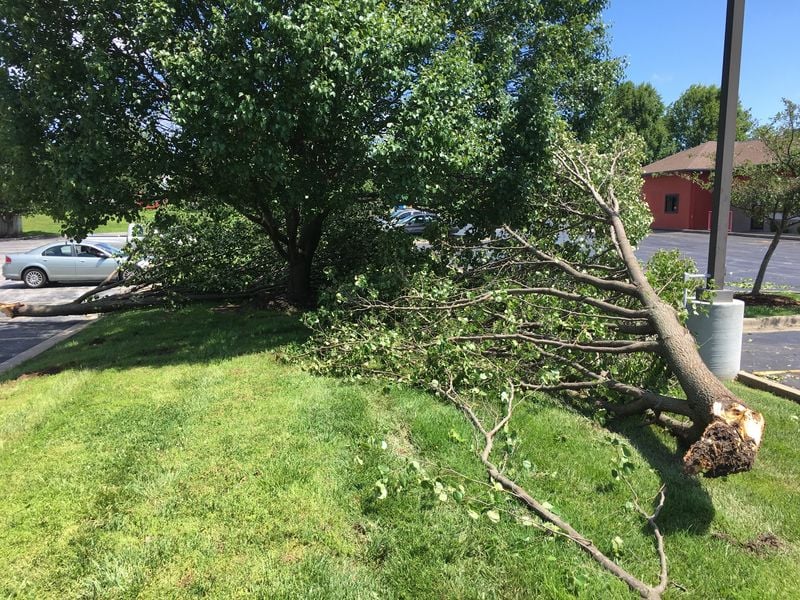
Pears seem to be pretty popular on church properties. Dayspring Church here in Springfield had about 20 of them. In 2007, when Springfield had the huge ice storm, every single one of them broke out. There have been several windstorms since then, and we have trimmed at least 10 of them for storm damage. We’ve had them break out on houses, and because they’re so heavy, they actually do some damage.
Invasive
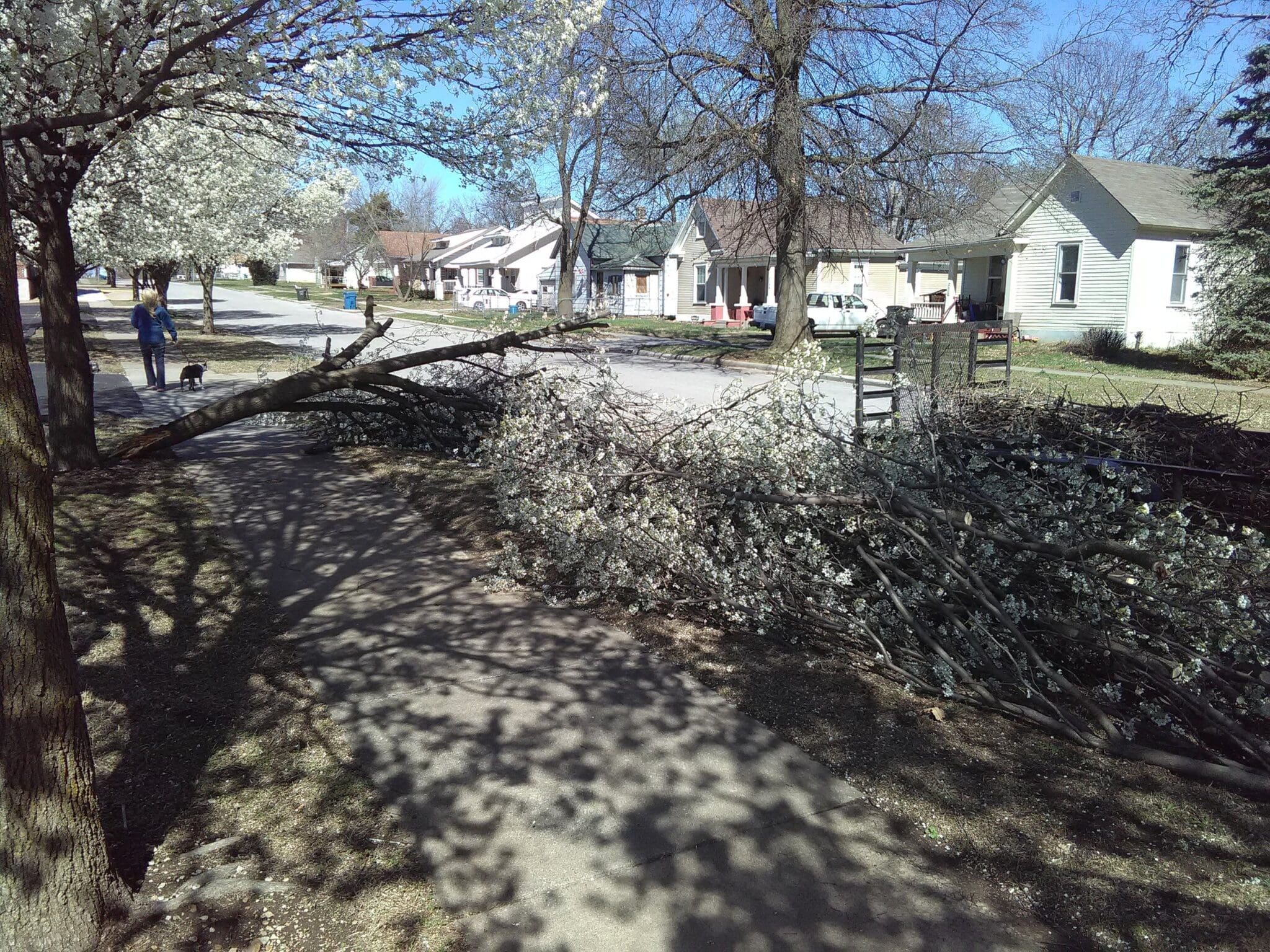
They are also considered invasive because they are so prolific. They can outcompete other trees in the wild, so they are not really good for the Missouri landscape. When they were hybridized, the intention was that they would not have seeds that could make more trees. But the seeds were not, in fact, sterile, and before they realized it, the tree was commonplace in Southwest Missouri. When a bird eats the fruit, the carried seeds are broadcast via the bird’s droppings, and Bradford pears are spread into unintended places where they actually cause problems for native growth.
Missouri passed a law in 2025 that bans selling Callery pears in the state by 2029. But that isn’t to say that your Bradford pear is illegal, only that it is not allowed to sell them. So if you already have one, you don’t have to get rid of it. And I say this tongue-in-cheek: Support your local arborist, plant (or keep) Bradford pear trees.
Free native tree
The Missouri Department of Conservation runs a buyback program, which allows you to get a native replacement tree for free from them. Cut down your Callery pear, send a photo to them, and they will give you the free tree. Springfield has had a pickup spot. Registration for 2026 was March 16 to April 16 and you can learn more about that at moinvasives.org.
What to plant instead
The Conservation Department suggests American plum, flowering dogwood, eastern redbud, hawthorn and downy serviceberry. All five are native and flower in the spring.
If you have a pear now and want it trimmed or taken out, call us for a free tree removal estimate.
Want someone to look at the tree?
Free and on-site. Or read more about tree trimming.